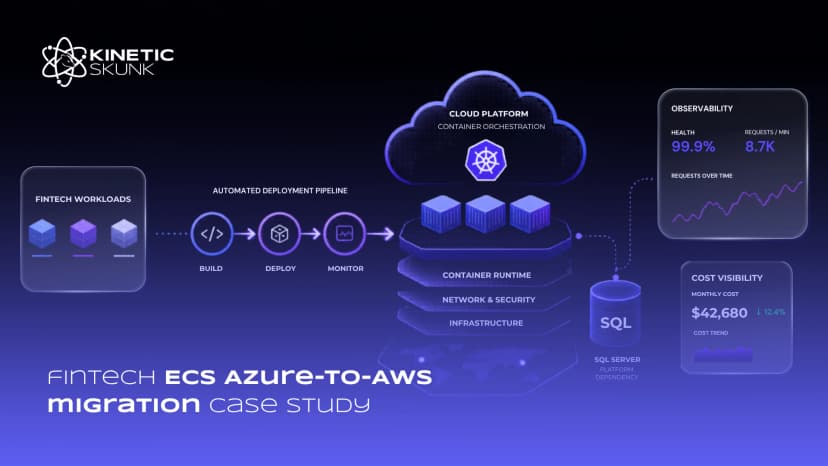
Moving Fintech Workloads from Azure to AWS ECS
How a fintech team used AWS ECS to simplify container operations, improve deployment control, and gain clearer visibility across application hosting costs and platform ownership.

When relational data, availability, backup, patching, and recovery need clear ownership, RDS is the path we operate with discipline.
Not a database feature list.
A managed relational data layer your team can operate, protect, explain, and improve.
Amazon RDS supports provisioning, configuration, backups, patching, scaling, and routine database management for supported relational engines.
Your data layer has visible operating routines, not only a running database.
Multi-AZ deployments, backup planning, patch windows, and restore routines are shaped around the workload's real business pressure.
Engineering, risk, and commercial stakeholders can see how availability and recovery are handled.
PostgreSQL, MySQL, MariaDB, SQL Server, Oracle, and Db2 support gives teams room to modernise without pretending every database belongs on the same path.
The engine choice stays connected to application fit, operating control, and future change.
RDS is the managed relational data layer. It is not an app runtime, container platform, or Kubernetes path. We connect it to the operating model that keeps production workloads steady and recovery evidence credible.
Provisioning, configuration, patch rhythm, access, monitoring, and cost signals become part of a managed platform routine.
Backups, restore expectations, Multi-AZ choices, and recovery evidence are tied to the importance of the data, not treated as defaults.
Performance and cost signals are reviewed against workload behaviour so the database estate can improve without guesswork.
The next step is a fit decision, then a managed handoff to operations, recovery, or both.
RDS starts with database fit, then becomes part of an operated platform with clear ownership, recovery routines, and performance evidence.
Journey
Map engines, workload criticality, data ownership, operating pressure, backup posture, and the evidence stakeholders expect.
Confirm whether RDS is the right relational route and shape the engine, deployment choice, and modernisation path around the application.
Connect Multi-AZ choices, backup policy, patch windows, restore routines, access controls, and review evidence to business pressure.
Review cost signals, performance behaviour, scaling pressure, patch rhythm, and monitoring before the database estate grows around assumptions.
Move RDS into managed hosting and recovery routines with support ownership, operational records, and review-ready recovery evidence.
AWS Managed Platform and Data Protection handoff
Your team keeps the relational engine and application context it needs while Kinetic Skunk helps shape the operating routines, recovery evidence, cost visibility, and platform handoff around it.
Relational data choices matter most when they stay connected to migration context, operating ownership, and the application platform around them.
How a fintech team used AWS ECS to simplify container operations, improve deployment control, and gain clearer visibility across application hosting costs and platform ownership.
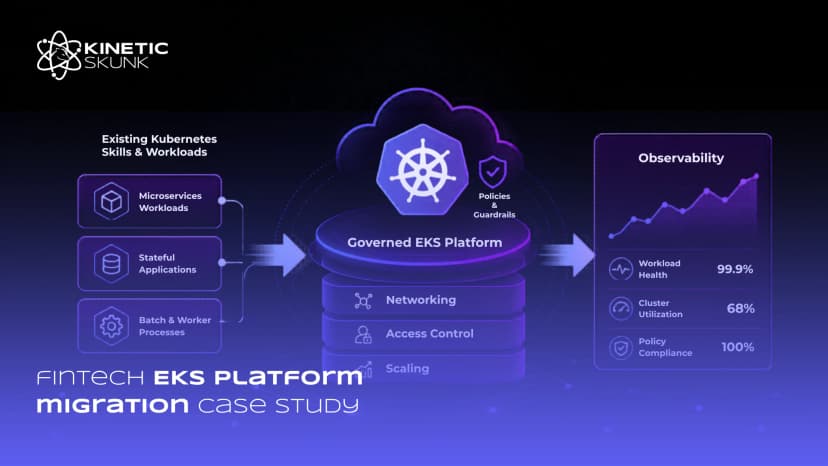
How a fintech team moved Kubernetes workloads from Azure to AWS while preserving engineering skills and gaining more control over cluster behaviour, networking, scaling, and observability.
RDS is one AWS path inside a wider platform story. These routes help teams separate database decisions from app runtime choices, recovery planning, and AWS review work.
See the full AWS programme context, validation badges, platform pathways, and delivery model.

Start here when an existing AWS workload needs risk visibility before database or platform changes.

Use the container path when the decision is about running application services, not managing relational data.
Connect RDS backup and restore routines to recoverable, review-ready evidence.
Connect RDS operations to the managed platform routines that keep production workloads steady.