KINETIC SKUNK

Building an AzureData Platform forReporting Pressure

How a workspace and venue technology provider separated reporting load from operational databases with a dedicated Azure-backed data platform proof of concept.

Case Study7 min readAzure, Migration, DevOps

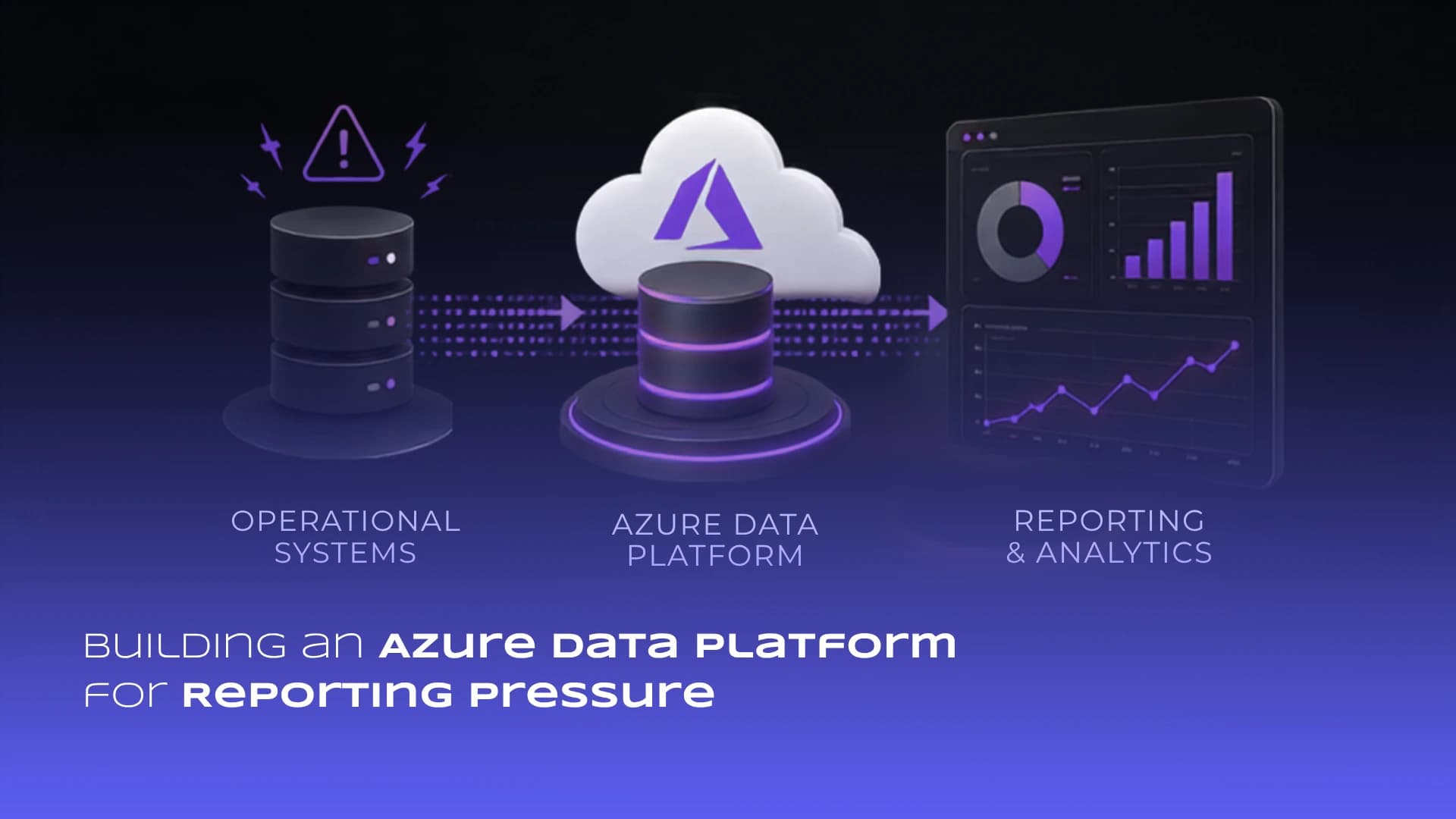
Abstract reporting and analytics workspace for Azure data case studies
Opening summary

A workspace and venue technology provider needed reporting to stop competing with operational systems. The answer was a dedicated Azure-backed data platform proof of concept that separated heavy queries from core application databases.

The public version keeps the story focused on reporting architecture, scalability, and decision support without adding unsupported tooling or savings claims.

In one minute

  • Reporting load was separated from operational databases.

  • Financial, sales, and event metrics were aggregated by source and status for clearer reporting.

  • Azure storage and processing patterns supported a scalable proof-of-concept data platform.

  • The public story focuses on reporting resilience and decision support rather than unapproved numeric claims.

Case-study details

Situation at a glance

  • Industry: workspace, hospitality, and venue technology.
  • Problem: reporting queries strained operational databases and limited reporting scale.
  • Platform decision: create a dedicated reporting foundation backed by Azure data patterns.

Context and reporting pressure

Core points

  • Reports and dashboards were pulling directly from operational databases.
  • Heavy reporting demand created performance pressure and limited the ability to scale reporting needs.
  • Leadership needed better access to sales, event, and financial metrics without destabilising core systems.

Azure data platform choices

Core points

  • Operational data was extracted into a dedicated reporting platform so analytical queries no longer competed with core application workloads.
  • Financial sales and event metrics were aggregated by source and status to support clearer reporting paths.
  • Azure storage and data processing patterns gave the proof of concept a scalable foundation connected to Azure partner services.

Delivery milestones and operating controls

Core points

  • The proof of concept established the shape of a dedicated reporting platform before a wider rollout.
  • Data movement, reporting grain, and source categories became explicit instead of hidden inside dashboard queries.
  • The platform separated operational performance from reporting growth.

Skunk tip

  • Define reporting grain and data ownership before optimising dashboards, otherwise every report becomes a platform exception.

Measured outcomes and lessons

Core points

  • Operational databases were protected from heavy reporting pressure.
  • The platform created a clearer basis for complex and frequent reporting.
  • The main lesson is that data platforms should reduce operating risk while improving decision quality.
Truth bomb

A dashboard is not a data platform. If every report hits production tables, reporting is part of the incident surface.

Reusable Azure reporting platform checklist

Operating checklist

  • Separate reporting load from operational systems before dashboard demand grows.
  • Define source, status, and reporting grain as part of the platform contract.
  • Use Azure storage and processing patterns where scale, governance, and reporting isolation matter.
  • Treat proof-of-concept scope as architecture evidence, not a production shortcut.

Close

If your team is weighing an Azure platform move, talk to Kinetic Skunk about the operating model, controls, and evidence you need before migration work starts.

Contact

Related insights

Abstract Azure platform architecture for anonymised Azure case studies

Unifying Workspace and Venue Platforms on Azure Kubernetes Service

How a workspace, hospitality, and venue technology provider used Azure Kubernetes Service to merge split systems into a scalable multi-tenant platform.

Case study hero for property platform modernisation on Azure

Revolutionising Property Management

Managing multiple properties efficiently has long been a challenge. Many organizations still use outdated systems that lack scalability and integration. As a result, these systems prevent the use of modern data insights, leading to higher costs and longer timelines. To address these problems, we …

Case study hero for Azure serverless delivery, environments, and release automation

Leveraging Serverless Products

Streamline Deployments and Facilitate Scaling Overview A global real estate software company sought a contemporary serverless solution for their new product, targeting serverless app development and hosting. Our mission was to construct a reliable infrastructure, streamline deployment autom…