KINETIC SKUNK

Part 2: EffortlesslyStreamline DevOpswith GitLab

Fortifying Your Code: Building Secure Pipelines with GitLab" dives deep into the crucial role of security within the software development lifecycle. Highlighting GitLab's comprehensive suite of security tools, this article showcases how automated security scanning and compliance as code can seaml…

In one minute

  • A single platform removes hand-offs between planning, build, and release.

  • Pipeline automation replaces repetitive checks so teams focus on product risk.

  • Measurable flow makes it easier to tune quality gates without slowing delivery.

  • Thin work in progress beats hero merges that bypass the same gates you advertised to auditors.

Article7 min readDevOps, DevSecOps

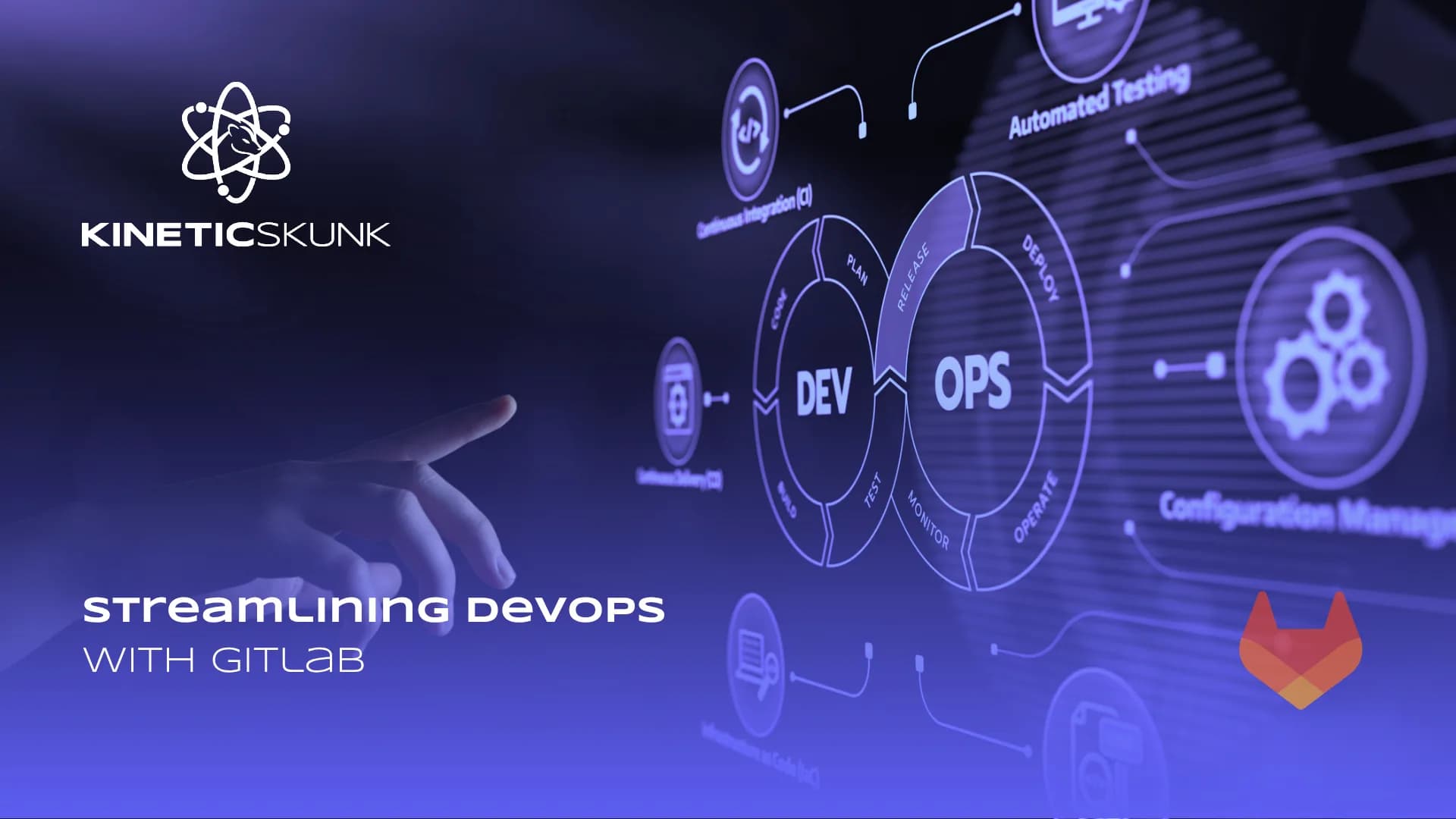
Editorial hero for streamlined DevOps with GitLab, pipelines and flow

SeriesDevSecOps with GitLab

Opening summary

Most delivery drag is not slow compilers, it is hand-offs between planning, build, and release. Each hop adds queue time, context loss, and a new place for security to chase evidence.

This second article focuses on how GitLab keeps work inside one loop so teams can streamline DevOps without multiplying tools.

Core insights

Why flow breaks when the toolchain sprawls

  • Every extra system is another login, another API key, and another place for drift.
  • Developers optimise for the path they can see; invisible process becomes shadow IT.
  • GitLab keeps planning, source, CI/CD, and package stages connected so status is honest.

Plan work where the code lives

Core points

  • Issues disconnected from merge requests invite “done” tickets that never shipped.
  • Milestones and weights only help when they roll up to a release train people believe in.
  • Short feedback loops start when product and engineering read the same board in GitLab.

Pipelines as contracts, not snowflakes

Core points

  • Include templates per language or team so new repos inherit guardrails instead of rediscovering them.
  • Cache and artifact policies should be standard; bespoke YAML per repo is a support tax.
  • Failed jobs need actionable logs, not walls of stack traces only the author understands.

Skunk tip

  • Time-box pipeline duration and split slow integration suites instead of letting queues grow silently.

Release orchestration without spreadsheet theatre

Core points

  • Tags, environments, and protected branches should tell the release story without a parallel spreadsheet.
  • Feature flags belong next to deployment controls so rollback and exposure share one vocabulary.
  • Change management loves evidence; exportable pipeline metadata beats screenshots.

Runner strategy that matches cost and isolation

Core points

  • Shared runners help experimentation; dedicated runners help regulated workloads.
  • Autoscaling fleets need budgets and alerts or spend follows peak CI minutes blindly.
  • Executor choice affects secrets handling, so platform teams should publish golden paths.

Metrics that steer behaviour, not vanity charts

Core points

  • Lead time for changes and deployment frequency tell you if flow improvements are real.
  • Change failure rate pairs with recovery time so speed does not trade away reliability.
  • Review queue age highlights where human bottlenecks undo automation investment.
Truth bomb

If your pipeline is green but releases still feel scary, you optimised tasks, not outcomes.
Streamlined DevOps habits on GitLab

Operating checklist

  • Keep merge requests small enough to review in one sitting and reject drive-by approvals.
  • Automate dependency bumps with bots where safe, but keep human eyes on licence and breaking changes.
  • Mirror trunk discipline: long-lived branches are loans that accrue interest.
  • Publish a single on-call path for broken pipelines so noise does not train teams to ignore alerts.

Close

Continue the trilogy with Part 1 for foundations and Part 3 for secure code. Need help tuning runners, templates, and release policy, contact us.

Contact

Related insights

Part 3: Building secure code with GitLab, pipeline security and compliance

Part 3: Building Secure Code with GitLab

Fortifying Your Code: Building Secure Pipelines with GitLab" dives deep into the crucial role of security within the software development lifecycle. Highlighting GitLab's comprehensive suite of security tools, this article showcases how automated security scanning and compliance as code can seaml…

Editorial hero for DevSecOps foundations with GitLab, planning and toolchain

Part 1: Laying the Foundation for DevSecOps with GitLab

Discover how GitLab is revolutionizing software development with its DevSecOps approach, streamlining efficiency and enhancing security in one seamless platform. Learn how integrating development, security, and operations can not only accelerate project timelines but also fortify your code agains…