KINETIC SKUNK

Preserving Kubernetes Skillsin an AWSEKS Migration

How a fintech team moved Kubernetes workloads from Azure to AWS while preserving engineering skills and gaining more control over cluster behaviour, networking, scaling, and observability.

In one minute

  • Kubernetes workloads moved to Amazon EKS on EC2 managed node groups.

  • Existing Kubernetes skills were preserved while AWS platform control improved.

  • VPC design, IAM, CloudWatch, Application Load Balancing, and RDS for SQL Server supported the platform path.

  • Fargate stayed a future evaluation option for workloads where operating and cost fit could be proven.

Case Study8 min readAWS, Migration, DevOps, Cloud Cost, Observability, Security

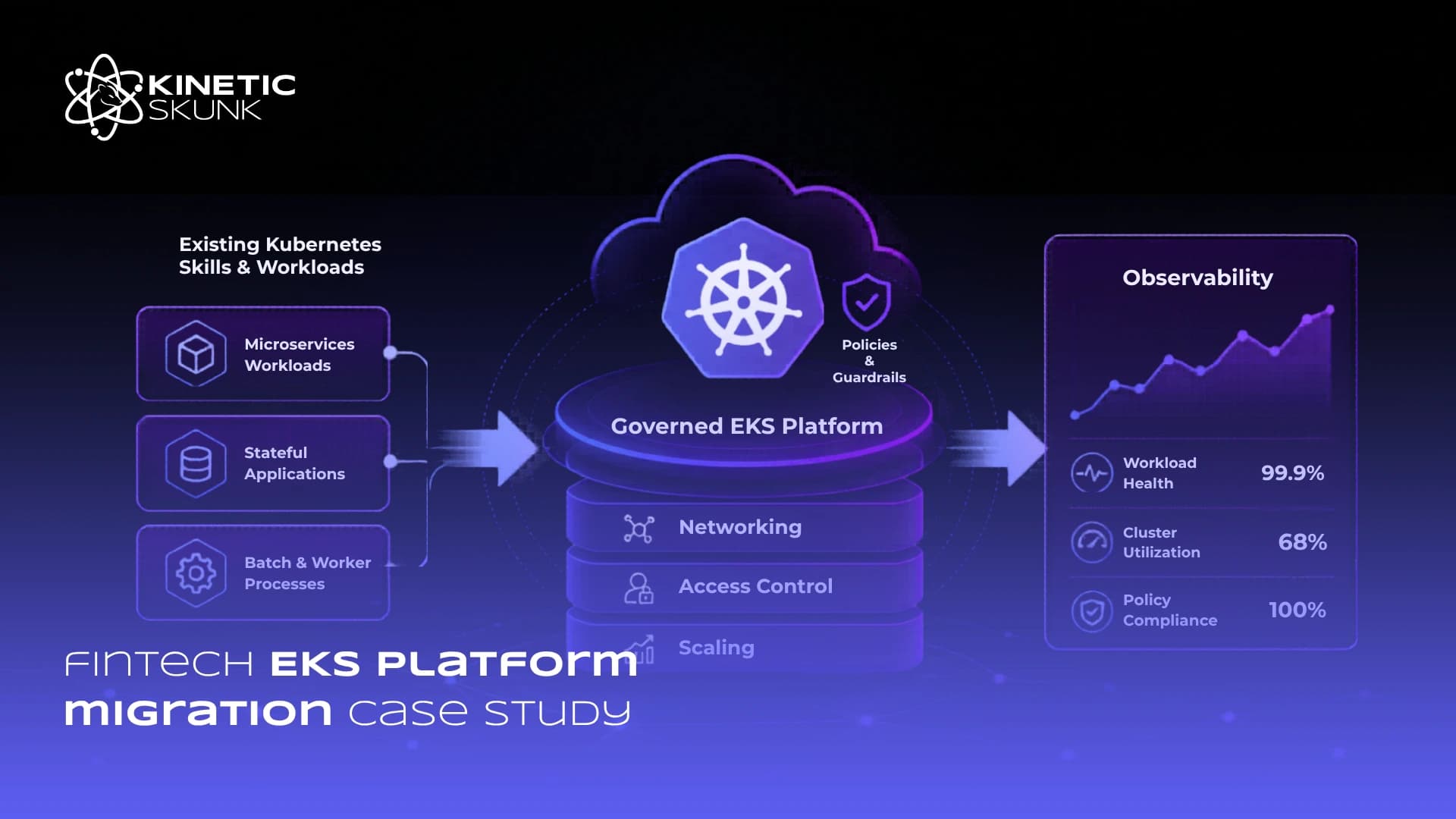
Abstract fintech Kubernetes and Amazon EKS platform operations environment
Opening summary

This migration had a different shape from an ECS-first move. The fintech team already had Kubernetes capability, so Amazon EKS let them preserve that investment while improving AWS control around the cluster.

The public story focuses on operating fit, visibility, and migration control, without adding unsupported performance or savings numbers.

Case-study details

Situation at a glance

  • Industry: financial technology, with an existing Kubernetes operating model.
  • Platform decision: use EKS where Kubernetes skills and requirements were justified.
  • Outcome framing: public outcomes remain qualitative until approved proof supports stronger claims.

Context and Kubernetes fit

Core points

  • A fintech team already had Kubernetes capability and needed a migration path that respected that investment.
  • The goal was to move from Azure pressure points to AWS without forcing engineers to relearn the operating model from scratch.
  • The decision was about preserving justified Kubernetes skills while improving control around the AWS platform foundation.

EKS architecture and service choices

Core points

  • The platform moved to Amazon EKS on EC2 managed node groups so the team could keep Kubernetes while improving AWS control.
  • VPC design, IAM, CloudWatch, Application Load Balancer, and RDS for SQL Server supported networking, access, observability, application traffic, and stateful services.
  • Fargate remained a future evaluation option for workloads where operating model and cost fit could be proven.

Delivery milestones and operating controls

Core points

  • The migration kept the team's operating model familiar while improving cluster control, networking, scaling, access, and observability.
  • SQL Server services stayed visible in the wider platform path instead of becoming a disconnected migration concern.
  • Future optimisation stayed evidence-led, so compute choices could follow workload fit rather than launch-day assumptions.

Skunk tip

  • Validate that Kubernetes is a real operating requirement before selecting EKS for a migration.

Measured outcomes and lessons

Core points

  • The platform direction preserved Kubernetes skills while giving the team more control over AWS networking, scaling, cluster operations, and observability.
  • Public outcomes remain qualitative unless approved proof supports exact performance or savings claims.
  • The lesson is that Amazon EKS fits best when Kubernetes capability is already valuable and the surrounding AWS partner services controls are designed deliberately.
Truth bomb

A good migration does not always replace the team's operating model; sometimes it gives that model a safer foundation.
Reusable EKS migration checklist

Operating checklist

  • Validate that Kubernetes is an operating requirement, not just a familiar default.
  • Design cluster networking, access, scaling, and observability together so ownership is clear.
  • Keep stateful services such as SQL Server visible in the wider migration path.
  • Treat future compute choices as evidence-led optimisation, not launch-day assumptions.

Close

If your team is weighing an AWS platform move, talk to Kinetic Skunk about the operating model, controls, and evidence you need before migration work starts.

Contact

Related insights

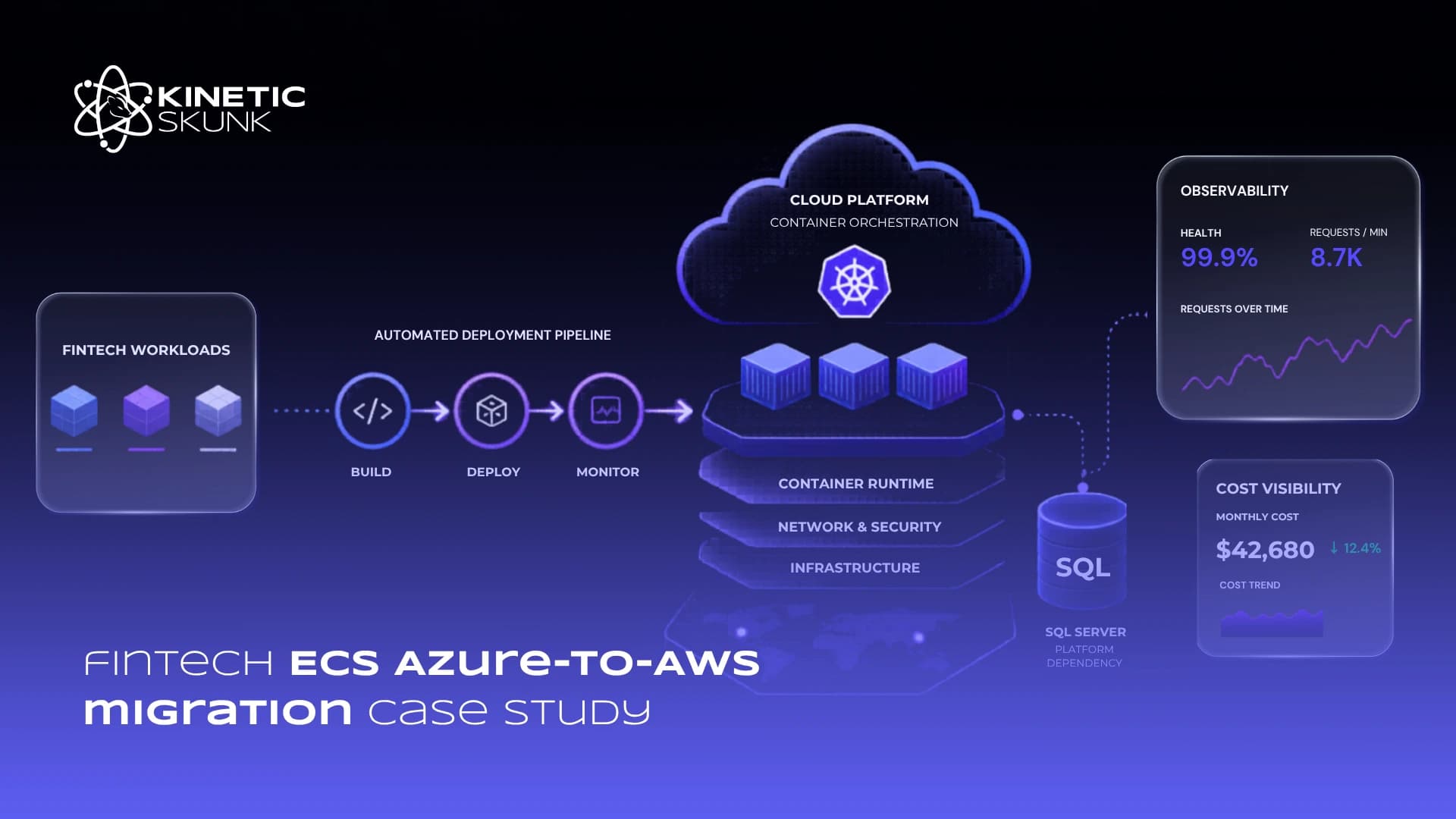
Abstract fintech AWS ECS migration and deployment operations environment

Moving Fintech Workloads from Azure to AWS ECS

How a fintech team used AWS ECS to simplify container operations, improve deployment control, and gain clearer visibility across application hosting costs and platform ownership.

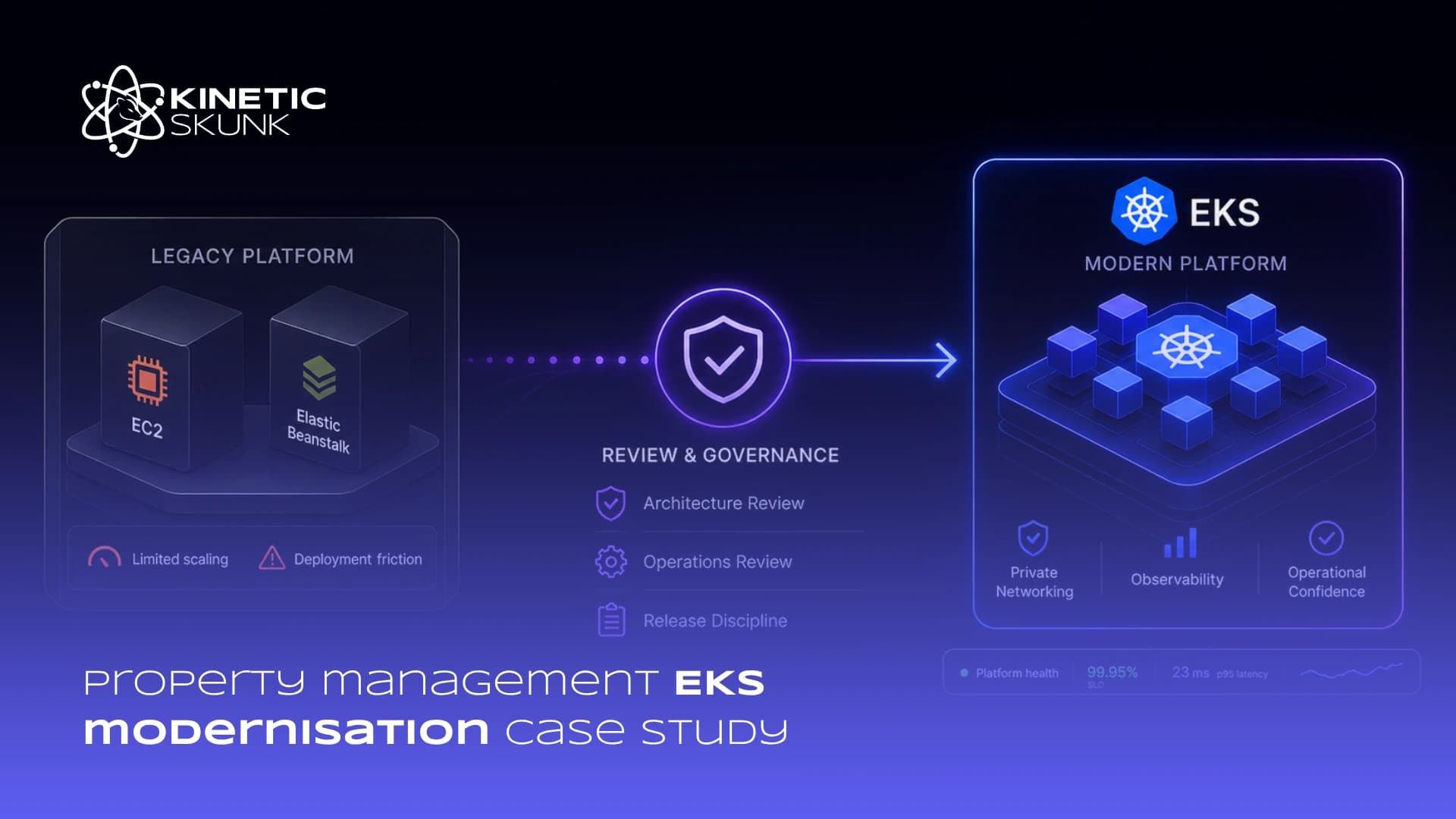
Abstract property technology Amazon EKS modernisation and observability environment

Modernising a Property Platform with Amazon EKS

How a property management technology team moved beyond legacy hosting limits with an Amazon EKS platform designed for clearer operations, stronger controls, and future growth.

Editorial hero for containerisation for deployment and scaling

Advantages of Containerisation for Deployment and Scaling

In today’s fast-paced digital world, containerization offers businesses a revolutionary way to streamline deployment and scale applications efficiently. Discover how platforms like AWS ECS, Red Hat OpenShift (ROSA), and Azure Red Hat OpenShift (ARO) transform application management and enhance sc…