KINETIC SKUNK

Moving Fintech Workloadsfrom Azure toAWS ECS

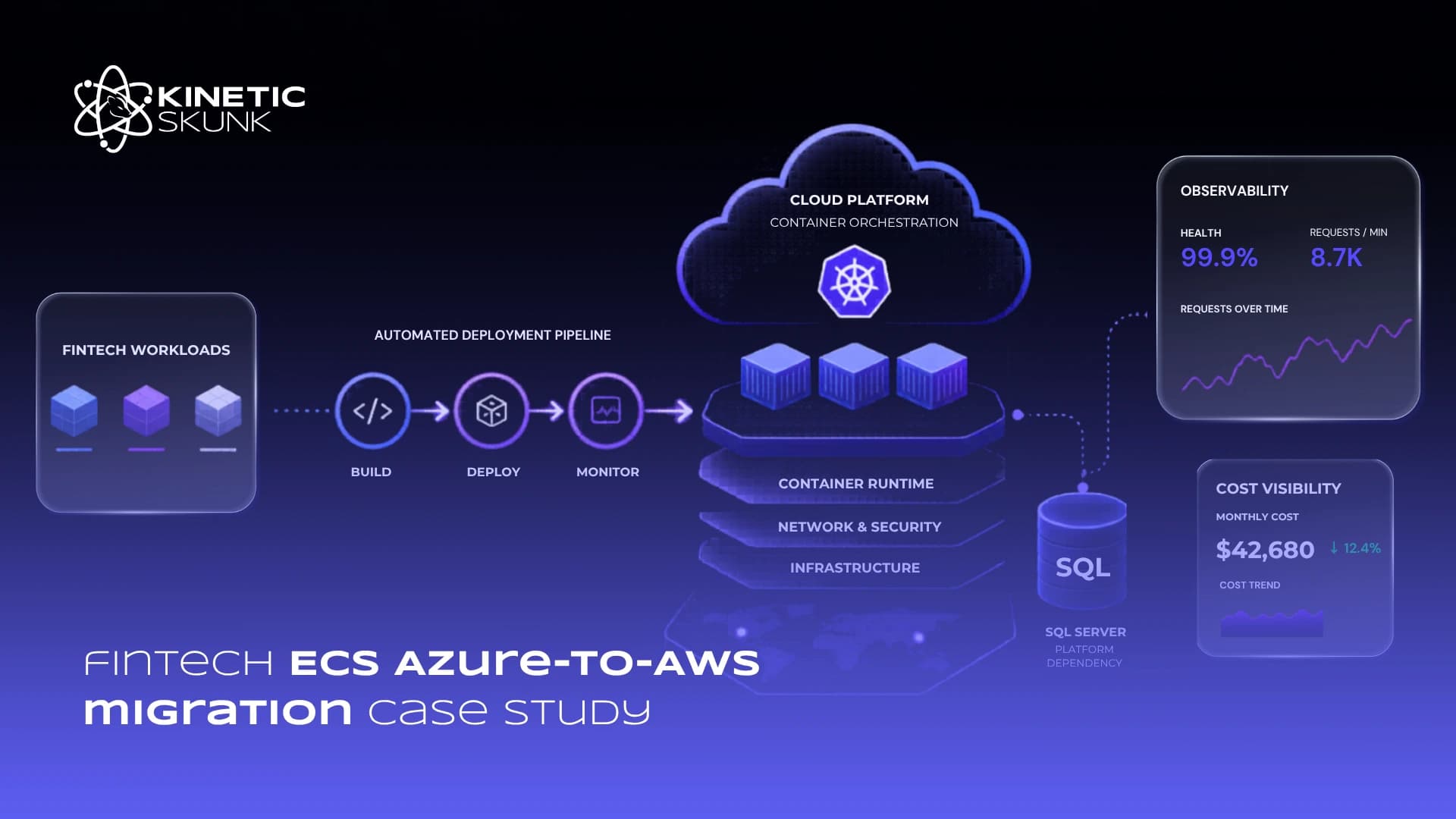
How a fintech team used AWS ECS to simplify container operations, improve deployment control, and gain clearer visibility across application hosting costs and platform ownership.

In one minute

  • Container workloads moved from Azure pressure points to Amazon ECS on EC2.

  • The team chose ECS first to avoid unnecessary Kubernetes overhead.

  • RDS for SQL Server, ECR, CloudWatch, load balancing, IAM, and deployment automation supported the move.

  • The published outcome is operational clarity and platform fit, not unapproved savings claims.

Case Study8 min readAWS, Migration, DevOps, Cloud Cost, Observability, Security

Abstract fintech AWS ECS migration and deployment operations environment
Opening summary

This fintech team did not need Kubernetes by default. The sharper decision was to move pressure-point workloads to an Amazon ECS operating model that the team could control, observe, and cost more clearly.

Fargate remained a future evaluation option, not a public claim about what was delivered.

Case-study details

Situation at a glance

  • Industry: financial technology, with container and SQL Server platform dependencies.
  • Platform decision: use ECS on EC2 as the initial AWS container operating model.
  • Outcome framing: Fargate remains a future evaluation path where workload fit supports it.

Context and migration pressure

Core points

  • A fintech team was running into pressure across its Azure-hosted application environment.
  • The business needed a controlled path for container workloads, SQL Server hosting, deployment automation, and operational visibility.
  • Kubernetes was considered, but the immediate operating need was simpler than a Kubernetes programme.

ECS architecture and service choices

Core points

  • Workloads moved to Amazon ECS on EC2 so the team could control the container operating model without taking on more platform complexity than needed.
  • RDS for SQL Server, ECR, CloudWatch, load balancing, IAM, deployment automation, and security controls supported the migration path.
  • Fargate stayed in the future evaluation lane where workload fit and cost behaviour could be assessed with evidence.

Delivery milestones and operating controls

Core points

  • The migration connected application hosting, database services, image management, observability, and access control into one operating story.
  • Deployment responsibilities became easier for technical leaders to see and govern.
  • Cost visibility was treated as a management discipline, not as a public savings claim without finance-approved evidence.

Skunk tip

  • Choose the container runtime that matches the team's operating needs before defaulting to Kubernetes.

Measured outcomes and lessons

Core points

  • The team gained better operational clarity and a more suitable container operating model.
  • Deployment and infrastructure responsibilities became easier to separate, review, and improve.
  • The lesson is that Amazon ECS can be the practical AWS partner services path when container control matters more than Kubernetes capability.
Truth bomb

Not every container migration needs Kubernetes; the right platform is the one the team can operate with discipline.
Reusable ECS migration checklist

Operating checklist

  • Choose ECS when the immediate need is container consistency, not a Kubernetes transformation.
  • Keep SQL Server hosting, deployment automation, and observability in the migration design from day one.
  • Separate delivered architecture from future optimisation options such as Fargate evaluation.
  • Use cost visibility as a management discipline, not as a public savings claim without finance approval.

Close

If your team is weighing an AWS platform move, talk to Kinetic Skunk about the operating model, controls, and evidence you need before migration work starts.

Contact

Related insights

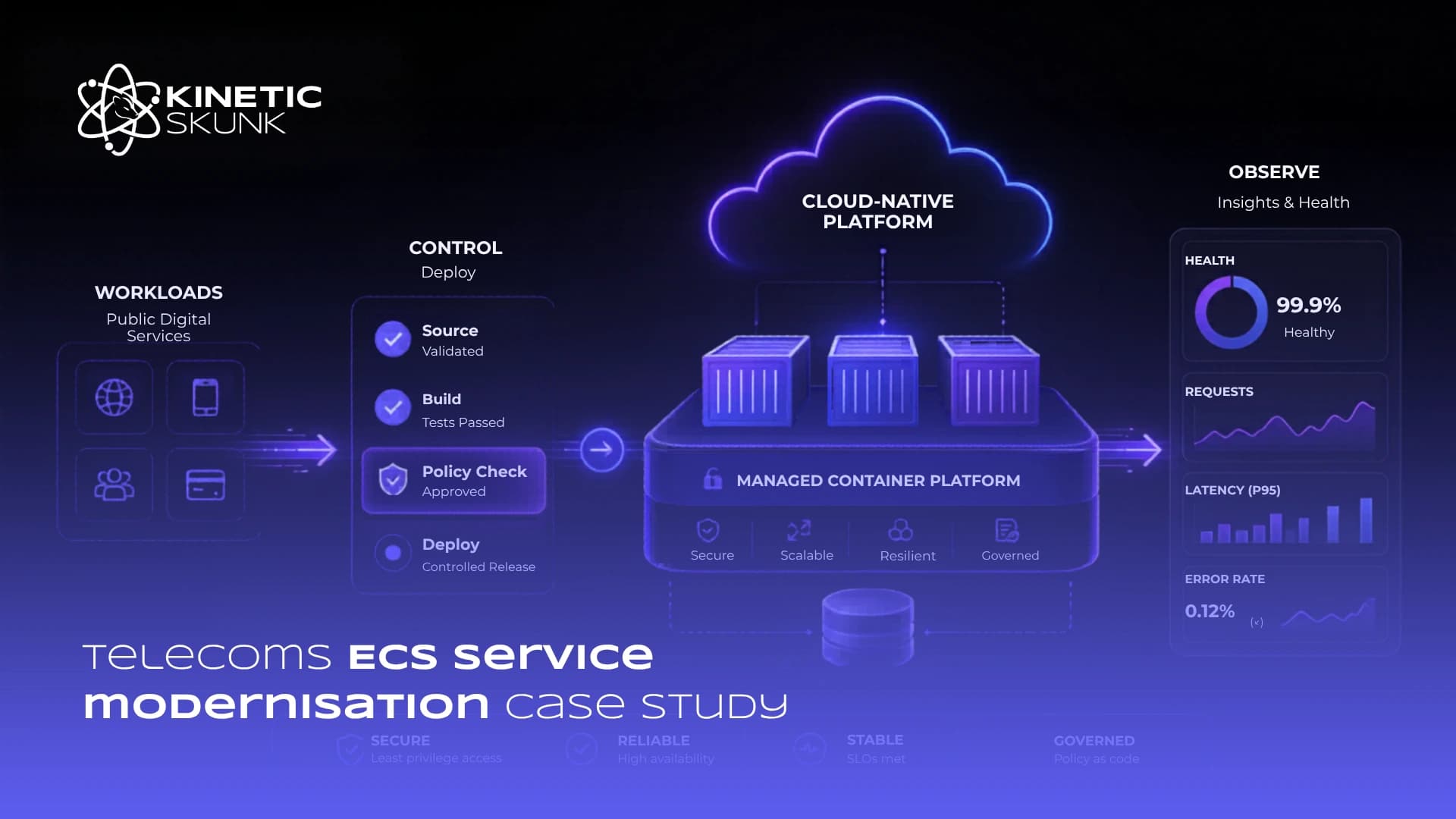
Abstract telecoms AWS ECS platform architecture and observability environment

Modernising a Public Digital Service on AWS ECS

How a telecoms team moved a public digital service onto an AWS container platform with stronger deployment control, clearer operations, and better foundations for growth.

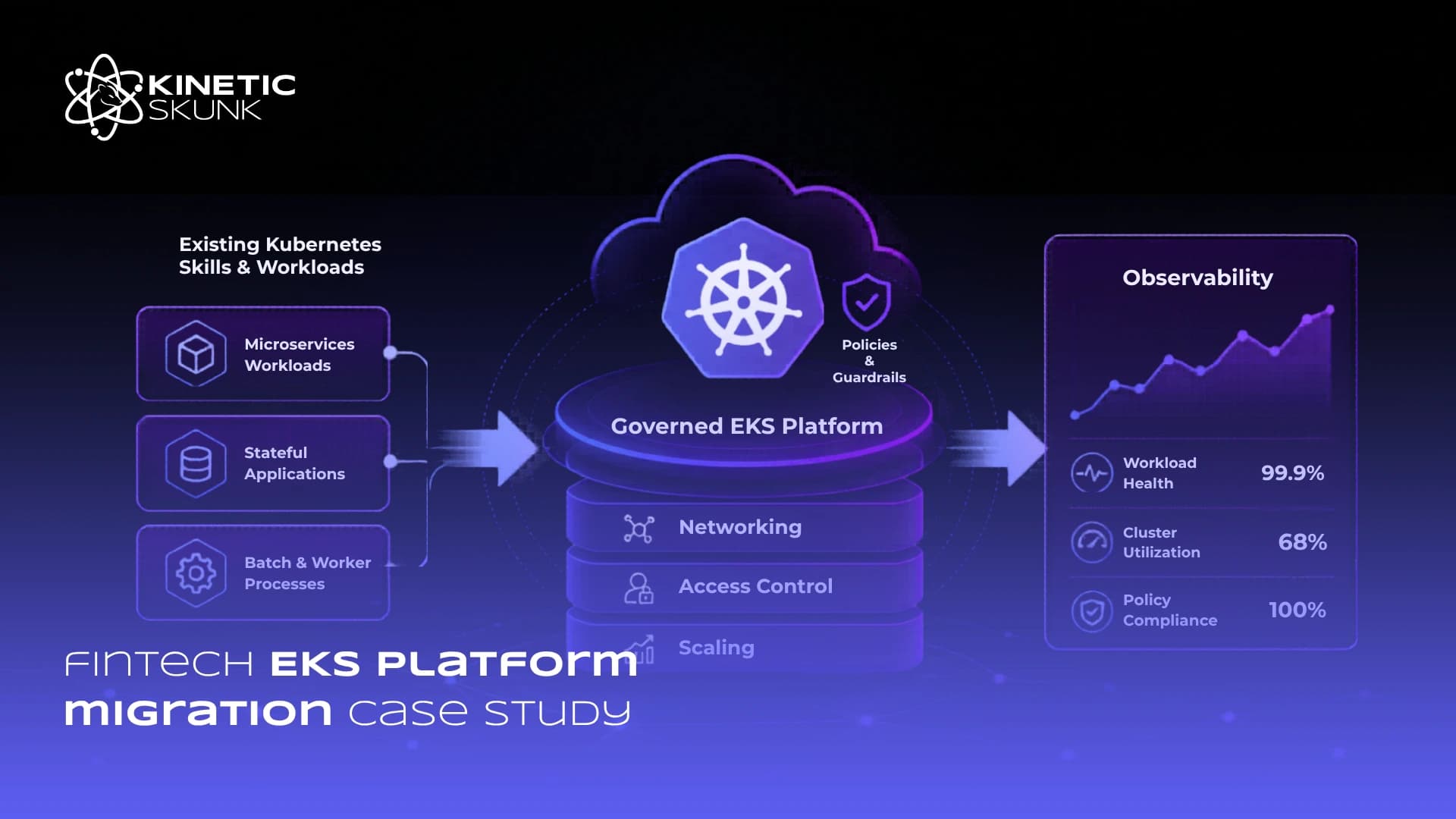
Abstract fintech Kubernetes and Amazon EKS platform operations environment

Preserving Kubernetes Skills in an AWS EKS Migration

How a fintech team moved Kubernetes workloads from Azure to AWS while preserving engineering skills and gaining more control over cluster behaviour, networking, scaling, and observability.

Editorial hero for containerisation for deployment and scaling

Advantages of Containerisation for Deployment and Scaling

In today’s fast-paced digital world, containerization offers businesses a revolutionary way to streamline deployment and scale applications efficiently. Discover how platforms like AWS ECS, Red Hat OpenShift (ROSA), and Azure Red Hat OpenShift (ARO) transform application management and enhance sc…