KINETIC SKUNK

Eliminating Reporting Load onProduction Systems with aModern Data Platform

How a SaaS provider reduced reporting load on production systems by implementing a scalable Azure-based data platform.

Case Study8 min readAzure, Migration, DevOps, Observability

Case study hero for Azure data platform reporting modernisation
Opening summary

A SaaS provider relied heavily on its operational database for reporting and dashboards, creating performance bottlenecks that risked affecting core application functionality. As reporting demands increased, transactional workloads and analytics queries were competing for the same production capacity.

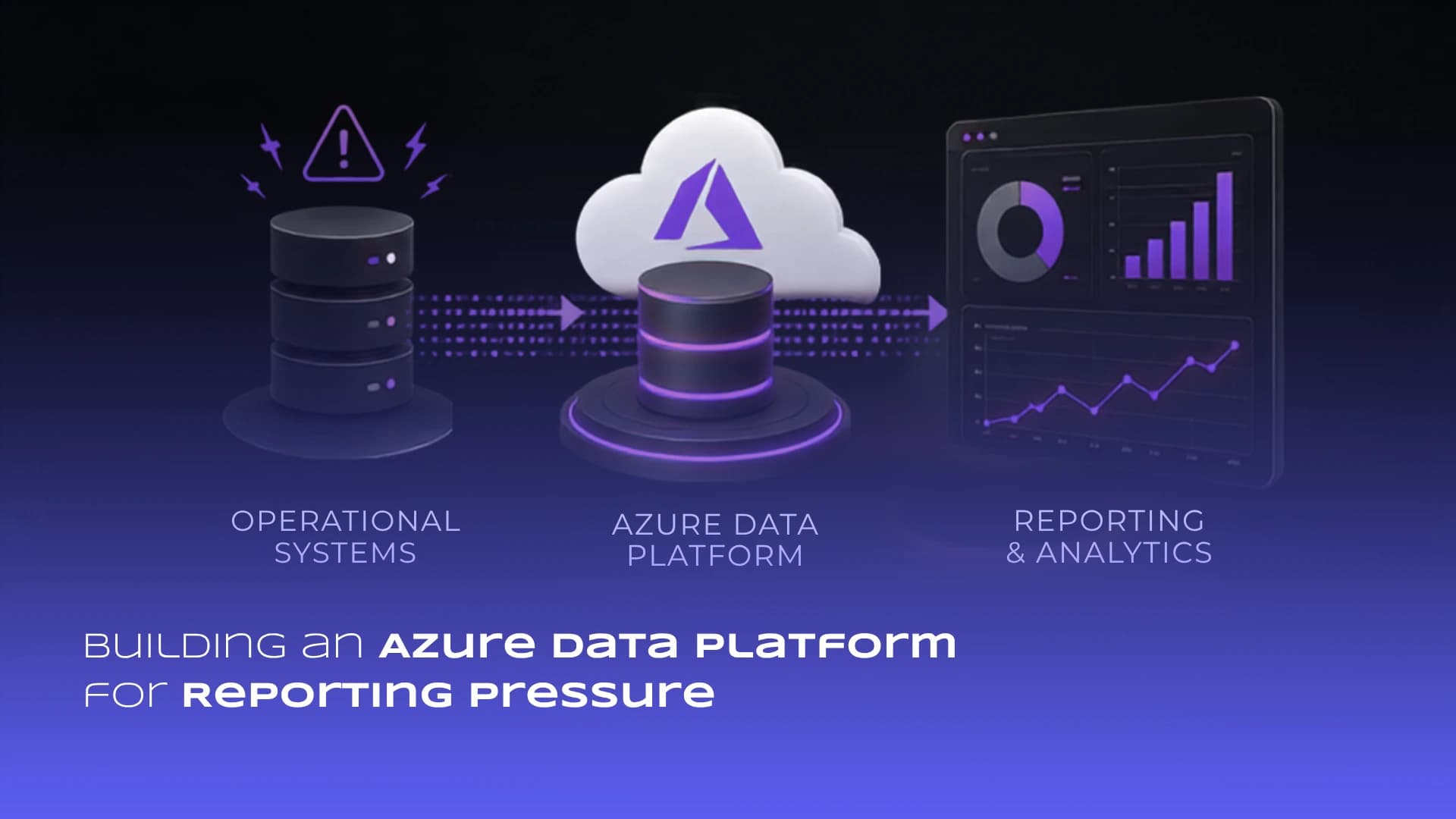
Kinetic Skunk partnered with the client to design and implement a dedicated data platform on Microsoft Azure, using Azure Data Factory, Azure SQL Database, and structured ETL pipelines to decouple reporting from operational systems.

In one minute

  • Reporting queries were moved away from production databases into a dedicated reporting layer.

  • Azure Data Factory orchestrated scheduled batch extraction and transformation processes.

  • Azure SQL Database supported query-ready reporting datasets for analytics and dashboards.

  • The architecture created a scalable foundation for future data lakes, governance, and advanced analytics.

Case-study details

Situation at a glance

  • Client context: a SaaS provider with reporting and dashboards running against operational databases.
  • Constraint: growing analytics demand was increasing load on production systems and limiting independent reporting scale.
  • Success definition: reliable business insight without compromising application performance or system stability.

Client context and reporting pressure

Core points

  • The SaaS provider relied on its operational database for reporting and dashboard workloads.
  • As reporting demands increased, the platform had to support both transactional workloads and analytics queries.
  • Kinetic Skunk partnered with the client to separate reporting workloads from the production environment.

Production database risk and performance bottlenecks

Core points

  • Reporting queries ran directly against production databases, increasing load on systems that served the core application.
  • The architecture limited the client's ability to scale reporting independently of transactional systems.
  • Growing demand for business insights created a stability risk during peak usage periods.
Truth bomb

If every dashboard query hits production, reporting becomes part of the application performance risk.

Dedicated Azure data platform design

Core points

  • Kinetic Skunk designed a modern data platform to decouple reporting from transactional systems.
  • Azure SQL Database introduced a dedicated reporting data store for analytics and dashboard workloads.
  • Azure Storage and staging patterns provided a foundation for future enhancements such as data lakes, governance, and advanced analytics.

Skunk tip

  • Separate production protection from reporting convenience first, then optimise dashboard experience on top of a safer data flow.

Data Factory, ETL, and reporting data model delivery

Core points

  • Azure Data Factory orchestrated batch data extraction and transformation processes.
  • Structured ETL pipelines moved data from source systems into a dedicated reporting layer.
  • Raw operational data was transformed into query-ready datasets aligned to business metrics.

Outcomes, scalability, and future analytics foundation

Core points

  • Production databases carried less reporting load, reducing the risk of performance degradation during peak usage.
  • Reporting became faster, more reliable, and easier to scale independently of the core system.
  • The Azure partner services work created a stronger foundation for data consistency, business insight, and future analytics expansion.
Reusable data platform modernisation checklist

Operating checklist

  • Identify which reporting queries are competing with production transactional workloads.
  • Create a dedicated reporting data store before dashboard demand becomes an application risk.
  • Use orchestrated ETL pipelines to move, transform, and structure operational data for analytics.
  • Design batch intervals around business reporting needs and production-system protection.
  • Leave room for future data lakes, governance, and advanced analytics once the reporting foundation is stable.

Close

If reporting is putting pressure on your production systems, talk to Kinetic Skunk about a data platform that delivers reliable insights without compromising application performance.

Contact

Related insights

Abstract reporting and analytics workspace for Azure data case studies

Building an Azure Data Platform for Reporting Pressure

How a workspace and venue technology provider separated reporting load from operational databases with a dedicated Azure-backed data platform proof of concept.

Case study hero for property platform modernisation on Azure

Revolutionising Property Management

Managing multiple properties efficiently has long been a challenge. Many organizations still use outdated systems that lack scalability and integration. As a result, these systems prevent the use of modern data insights, leading to higher costs and longer timelines. To address these problems, we …

Case study hero for Azure serverless delivery, environments, and release automation

Leveraging Serverless Products

Streamline Deployments and Facilitate Scaling Overview A global real estate software company sought a contemporary serverless solution for their new product, targeting serverless app development and hosting. Our mission was to construct a reliable infrastructure, streamline deployment autom…