KINETIC SKUNK

Advantages of Containerisationfor Deploymentand Scaling

In today’s fast-paced digital world, containerization offers businesses a revolutionary way to streamline deployment and scale applications efficiently. Discover how platforms like AWS ECS, Red Hat OpenShift (ROSA), and Azure Red Hat OpenShift (ARO) transform application management and enhance sc…

Article8 min readAWS, DevOps, Migration

Editorial hero for containerisation for deployment and scaling
Opening summary

Containers standardise packaging, orchestration decides how you scale and heal. Cost follows utilisation, so observability and rightsizing stay non negotiable.

This article ties deployment patterns to operating discipline on AWS and OpenShift style estates without pretending the logo fixes culture.

In one minute

  • Containers standardise packaging; orchestration decides how you scale and heal.

  • AWS ECS and OpenShift patterns differ in operations model, not in the need for discipline.

  • Cost follows utilisation, so observability and rightsizing stay non negotiable.

What changed

Situation before containerisation

  • Teams shipped images faster than they agreed on runtime policy and backup paths.
  • Finance asked for unit economics while engineering chased utilisation blind spots.
  • Incidents showed gaps in health checks, rollout order, and secret handling.

Packaging wins and new risks

Core points

  • Stakeholders needed a single credible story before budgets and timelines locked in.
  • Legacy habits and tooling debt competed with the outcomes marketing promised externally.
  • Scope stayed honest by naming what would move in phase one versus what waited on data.

Orchestration choices

Core points

  • Regulated or high-trust contexts punish silent assumptions about access, retention, and blast radius.
  • Integration seams between teams multiplied rework when contracts were not written down.
  • Non-prod behaviour that did not mirror production invited surprises during the first real traffic.

Operational guardrails

Core points

  • Automation and observability had to land together so operators could trust rollback and forward fix.
  • Owners were named for pipelines, environments, and data handoffs instead of a shared inbox.
  • Change management sat next to engineering so habits survived the first month after go live.

Skunk tip

  • Rehearse one failure mode weekly until the runbook is boring, not heroic.

Lessons at scale

Core points

  • Velocity showed up when releases shrank and evidence travelled with the merge request.
  • Cost and risk curves improved when unused paths were retired instead of left on life support.
  • The durable lesson is that discipline on ownership beats another headline feature without adoption.
Truth bomb

If your rollback is a myth, your deploy frequency is vanity.
Container operations checklist

Operating checklist

  • Define image promotion rules and signing expectations before clusters multiply.
  • Rightsize with utilisation signals, not only CPU peaks from batch windows.
  • Keep backup and restore drills for stateful services on the same calendar as app releases.

Close

For help hardening container estates, contact us or read more articles.

Contact

Related insights

Case study hero for accelerated deployments on AWS ECS

Accelerating Deployments with AWS ECS

Accelerating deployments with AWS ECS helps FinTechs cut costs, speed delivery, and boost security with modern DevSecOps pipelines built for scale.

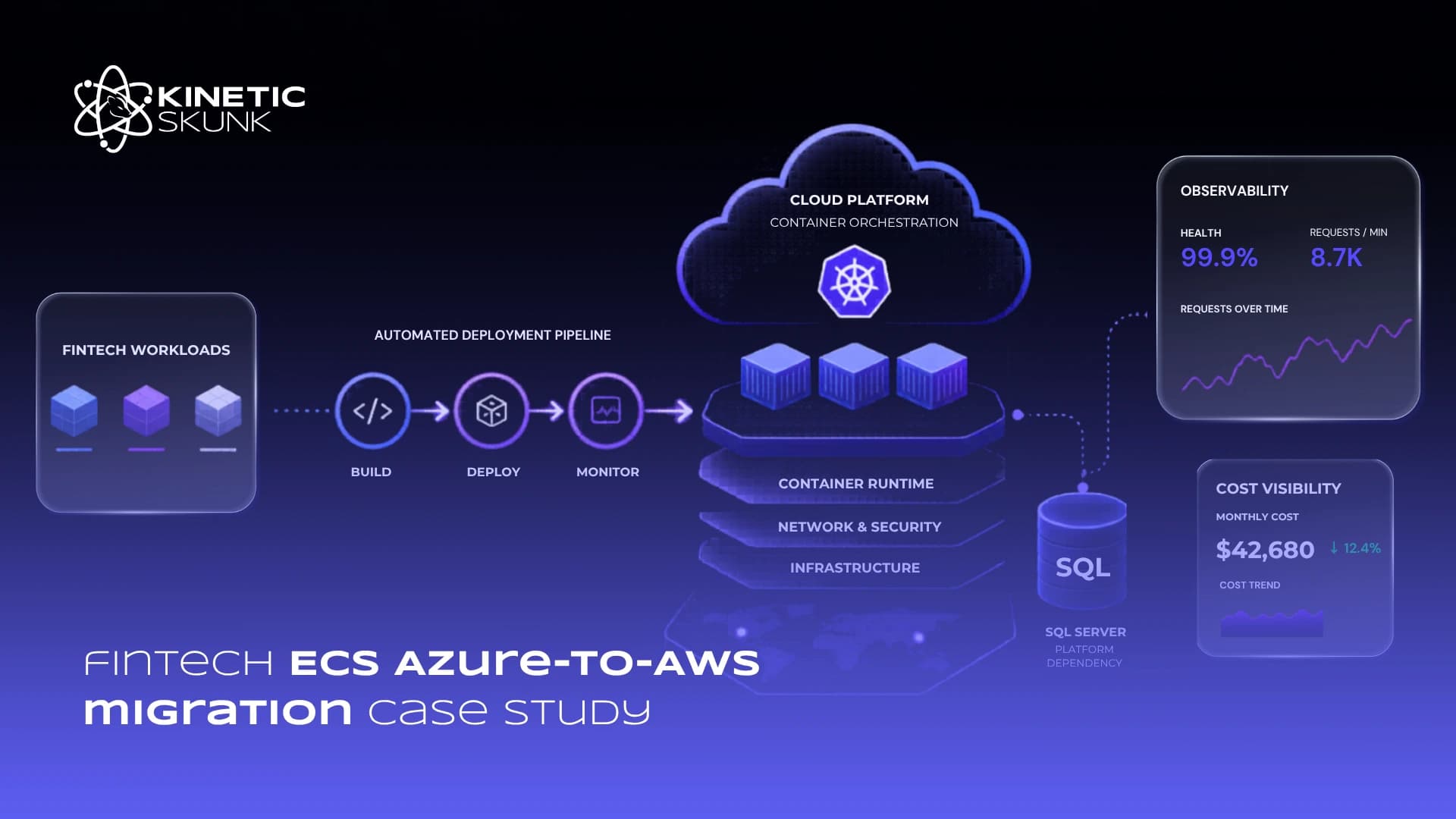
Abstract fintech AWS ECS migration and deployment operations environment

Moving Fintech Workloads from Azure to AWS ECS

How a fintech team used AWS ECS to simplify container operations, improve deployment control, and gain clearer visibility across application hosting costs and platform ownership.

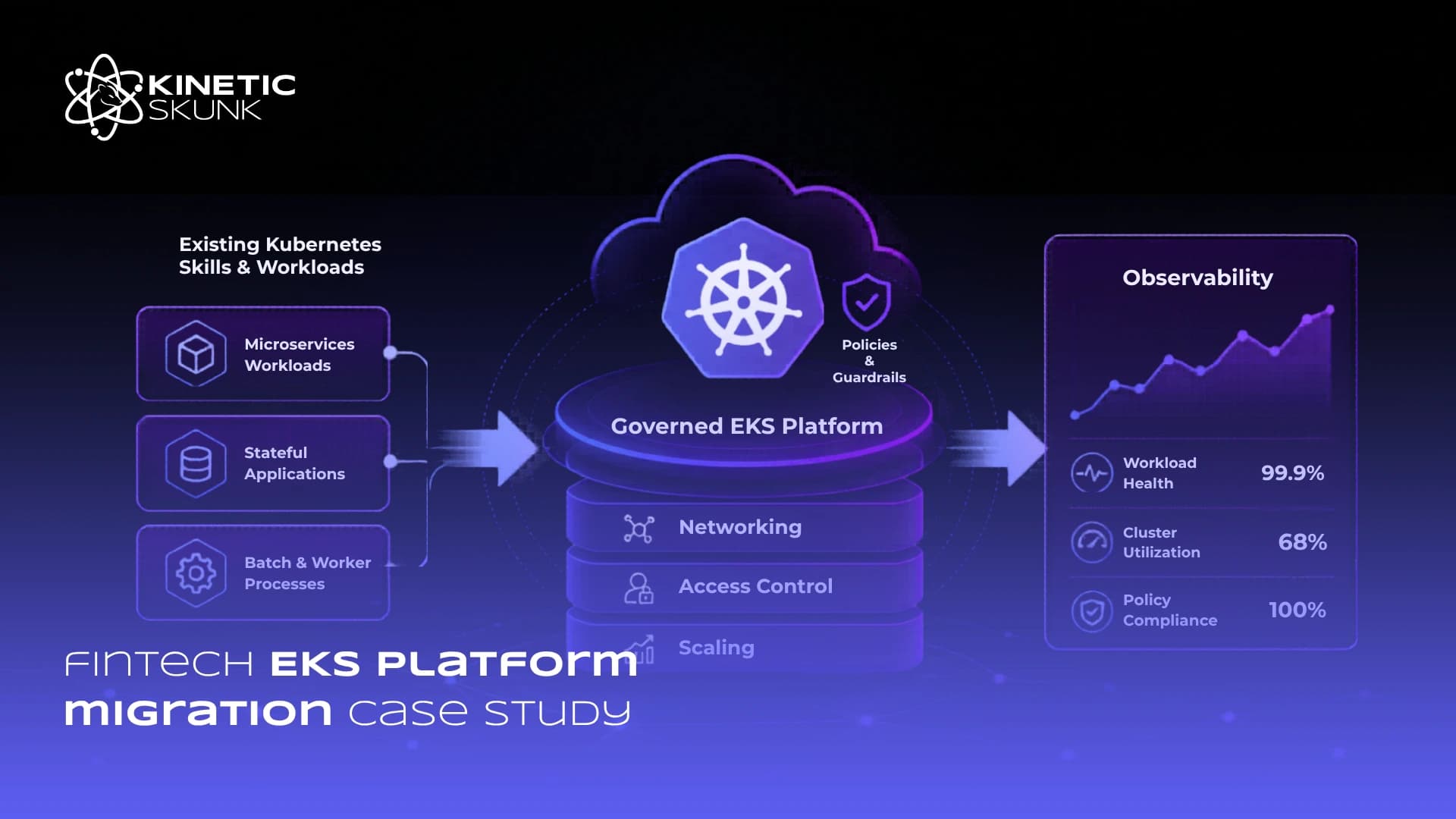
Abstract fintech Kubernetes and Amazon EKS platform operations environment

Preserving Kubernetes Skills in an AWS EKS Migration

How a fintech team moved Kubernetes workloads from Azure to AWS while preserving engineering skills and gaining more control over cluster behaviour, networking, scaling, and observability.